Fire Alarm Detectors and Panels Denver: A Simple Guide for Building Decision Makers
If you are responsible for a building in Denver, the fire alarm system eventually lands on your desk, whether you asked for it or not. Sometimes it shows up during a tenant improvement project. Sometimes it appears after a nuisance alarm at 2:00 a.m. Sometimes it arrives as a stack of inspection notes with abbreviations that make perfect sense to a technician and almost none to Denver area fire safety services an owner, manager, or facilities director.
The good news is that you do not need to become a fire alarm designer to make solid decisions. You do need a clear picture of what detectors and panels do, how they fit into the larger life safety system, and where local enforcement in Denver can shape the real-world requirements. That last point matters more than many people realize. Denver adopts model codes with local amendments, so the practical answer for one jurisdiction may not be the practical answer for another. A plan that looks fine on paper can change once the local authority reviews it.
For most building decision makers, the smartest approach is not chasing every technical detail. It is understanding the system well enough to ask better questions, budget realistically, and avoid the common mistakes that create delays, false alarms, and expensive rework.
Start with the two parts everyone talks about
When people say "fire alarm system," they often mean two different things at once: the field devices and the control equipment.
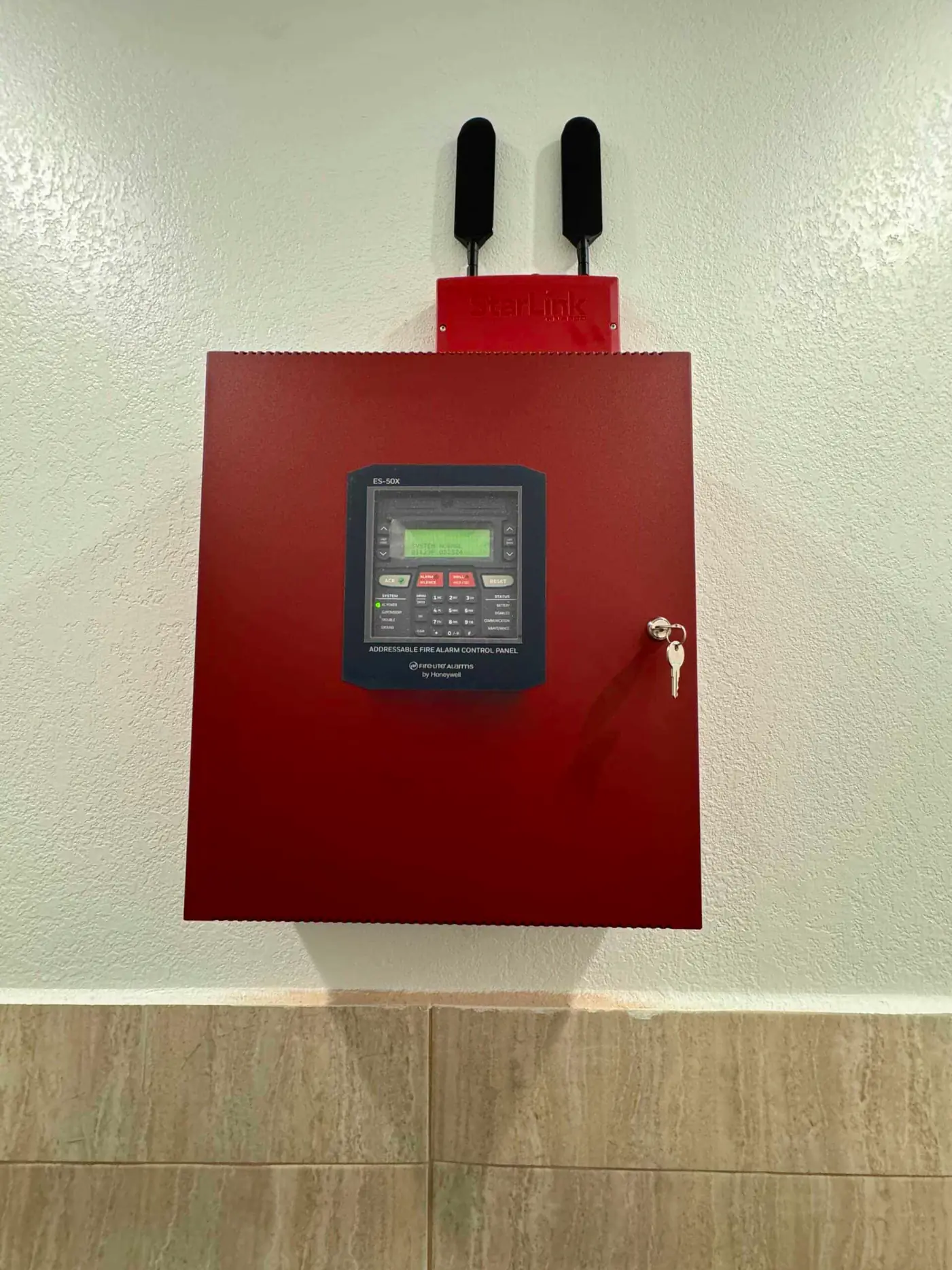
Detectors are the devices out in the building that sense conditions and send information back. Panels are the brains that receive those signals, process them, activate notification appliances, and in some cases transmit signals to a monitoring service or a central station, depending on the application and local requirements.
That may sound basic, but this distinction clears up a lot of confusion during projects. A manager might say, "We only need to replace a few detectors," when the real issue is a panel that can no longer support the device mix, has repeat trouble conditions, or does not align with the way the building is being used today. On the other hand, a panel replacement is not always the answer if a site has contamination, poor detector selection, or maintenance issues causing recurring problems.
In Denver, the phrase fire alarm detectors and panels Denver often comes up during remodels, changes of occupancy, tenant buildouts, and ownership transitions. The concern is usually not just whether the system exists, but whether it still fits the building as it actually operates.
What detectors really do, and why selection matters
A detector is not a generic box that goes on a ceiling because a drawing says so. It is a device chosen for a specific hazard, environment, and performance expectation. If that selection is wrong, the system may become annoying, unreliable, or both.
Heat, smoke, and other initiating devices each serve different purposes. The key issue for decision makers is that the environment around the detector matters as much as the detector itself. Dust, steam, cooking vapors, temperature swings, and airflow can all interfere with performance. A device that behaves perfectly in a clean office may be a terrible fit near a loading area or in a space with frequent aerosol use.
That is one reason false alarms are rarely just "bad luck." In my experience, repeat nuisance signals usually trace back to one of three things: the wrong device in the wrong spot, changes in building operations that were never reflected in the fire alarm layout, or deferred maintenance that slowly turned a stable system into a noisy one.
Denver pays close attention to this issue. Local code amendments address problematic systems and repeated unintentional false alarms, including repair or replacement in some cases and reimbursement for certain false alarm responses. For owners, that makes detector choice more than a technical detail. It becomes an operational and financial issue.
The panel is where strategy shows up
Panels are often treated as commodity hardware. That is a mistake. The panel is where all the system logic lives, where events are displayed, where troubles are identified, and where supervisory, alarm, and monitoring functions come together.
A building decision maker does not need to understand every programming nuance, but it helps to know what the panel is being asked to do. Is it only handling basic occupant notification? Is it tied into sprinkler supervisory signals? Does the application require transmission to a central station, commercial monitoring service, or continuously staffed monitoring service? In some Denver applications, that transmission path is not optional. It is part of the code expectation.
This becomes especially important when a building grows in complexity. A small property with straightforward occupancy may need a relatively simple setup. A mixed-use facility, a property with special hazards, or a site with phased renovations can place much greater demands on panel capacity, coordination, and testing.
I have seen owners focus heavily on the visible devices in the ceiling because those feel tangible. The panel gets less attention because it sits in a room or closet and quietly does its job. Then a renovation begins, additional devices are needed, and someone discovers the system has very little flexibility left. That tends to be an expensive moment.
Why Denver projects need local coordination early
One of the easiest ways to lose time on a fire alarm project is to assume the base code tells the whole story. It does not. Denver uses the ICC code family with local amendments, and those amendments can affect plan review, installation details, monitoring requirements, and the treatment of false alarms.
For decision makers, this means two things. First, if your project is in Denver, ask early how the local authority wants the scope presented and reviewed. Second, leave room in the schedule for comments, revisions, and coordination with the fire marshal or authority having jurisdiction.
This issue is not unique to fire alarm systems. It also comes up with hazardous materials permits, regulated fire safety work, and broader life safety changes. The lesson is the same every time: local review is not an afterthought. It is part of the project.
A tenant improvement that looks minor from a leasing perspective can trigger meaningful fire protection review. If you wait until ceiling work starts to sort out whether detectors, notification appliances, or panel updates are required, your trades will end up waiting on each other.
False alarms are rarely a small annoyance
A lot of building teams treat nuisance alarms like background noise. They should not. Frequent false signals wear down occupant trust, strain operations, create after-hours calls, and can draw regulatory attention. In Denver, fire alarm false alarms Denver is not just a search term. It is a real management issue with code consequences when a system keeps causing unintentional responses.
There is also a human factor that gets overlooked. When staff and tenants hear alarms that repeatedly turn out to be nothing, they can become slower to react during a genuine event. That is a dangerous pattern.
The practical fix is usually not one big dramatic upgrade. It is careful diagnosis. Was a smoke detector installed where steam or aerosol products predictably affect it? Has a once-clean storage area turned into a dusty workroom? Is there intermittent wiring trouble? Did renovation work leave a detector dirty or improperly protected? Has the panel been logging recurring troubles that no one fully investigated?
This is where experienced service work earns its keep. A system that "passes" one day can still be headed toward chronic nuisance behavior if nobody looks at the trend behind the event history.
Fire alarm systems do not live alone
A good fire alarm conversation often broadens into a larger fire protection conversation, because the systems influence each other. In Denver and across Colorado, sprinkler systems, suppression systems, monitoring arrangements, and inspection obligations often overlap in practice even when different contractors handle different scopes.
For example, sprinkler supervisory devices report conditions that the alarm system may need to display and transmit. If a property uses a pre action sprinkler system Denver application, the coordination between detection, releasing logic, and water control becomes especially important. If a building relies on a dry pipe sprinkler system Colorado setup because of cold-weather exposure, supervisory conditions and testing coordination still matter, even though the sprinkler configuration differs from a wet system.
In the Mountain West, sprinkler freeze protection Colorado is not an abstract topic. Cold weather changes design conversations and service priorities. A property with attic spaces, loading areas, parking structures, or other vulnerable zones may need careful attention to how fire protection systems respond to temperature risk.
The same interconnected thinking applies to special hazards. A server room or archive area might raise questions about clean agent fire suppression Colorado. A restaurant or institutional kitchen will bring up commercial kitchen fire suppression Denver. Those are separate systems with their own design and maintenance considerations, but they do not exist in isolation from the alarm system. Signals still need to be managed, monitored, and tested within the larger life safety framework.
Testing and inspections are where theory meets reality
A surprising number of owners assume that if a fire alarm system was installed correctly years ago, it is largely a set-it-and-forget-it asset. That belief does not last long once you start seeing real inspection reports.
NFPA 72 addresses fire alarm and signaling system design, inspection, testing, and maintenance. The practical takeaway is simple: systems need ongoing attention. Testing is not just a box-checking exercise. It is how you find drift, damage, communication issues, device failures, and the small defects that eventually become big headaches.
In Denver, NFPA 72 fire alarm testing Denver comes up frequently around annual service planning, ownership due diligence, and code compliance discussions. What decision makers should remember is that testing takes coordination. Alarms may need to be put on test with the monitoring entity. Occupants may need notice. Elevators, access control, or suppression interfaces may need special handling depending on the setup.
Water-based fire protection follows a similar rhythm under NFPA 25. That matters even if your immediate concern is detectors and panels, because service calendars often need to account for both alarm and sprinkler obligations. NFPA 25 sets minimum frequencies for many inspection, testing, and maintenance activities, and those intervals can be monthly, quarterly, semiannual, annual, or longer depending on the component and task. So when someone asks about fire sprinkler inspection frequency Colorado or NFPA 25 inspection Colorado, the honest answer is usually, "It depends on which devices and functions you are talking about."
That answer frustrates people at first, but it is the truthful one. A serious service plan is a calendar, not a single annual appointment.
What a smart service calendar usually considers
Most building leaders do better when they think in terms of recurring responsibilities rather than one event each year. A working calendar often has to account for:
- Routine alarm inspection and testing under NFPA 72
- Sprinkler inspection, testing, and maintenance intervals under NFPA 25
- Monitoring coordination and signal verification
- Repairs that arise from deficiencies found during scheduled work
- Local review, permits, or follow-up inspections when system changes are made
That is the level where budgets become more realistic. The annual test is only part of the cost. Deficiency correction, device replacement, troubleshooting, and coordination time can matter just as much.
Monitoring is not a side topic
Monitoring deserves more attention than it usually gets. Many owners think of it as a phone number in a binder, something handled by another vendor or hidden in a monthly invoice. In reality, transmission and response pathways are part of the system's function, and in certain Denver applications they may be required to report to a central station, commercial monitoring service, or continuously staffed monitoring service.
That means a building decision maker should understand who receives signals, what kinds of signals are transmitted, how after-hours contacts are managed, and what the expected process is during tests, troubles, and alarms. If your property team has changed, your contact list may be outdated. If your occupancy has changed, your procedures may not fit anymore.
This comes up often in the metro area, whether someone is asking about fire alarm monitoring Aurora CO or a system update in Denver proper. The municipal boundary may change, but the management lesson does not: if the people receiving and responding to alarm information are unclear, the system is not really under control.
Renovations are where hidden issues surface
Few things expose the condition of an older fire alarm system faster than renovation work. Ceilings open up, devices get moved, dusty conditions appear, circuits are extended, and suddenly a system that seemed fine starts showing its age.
Sometimes the issue is technical capacity. Sometimes it is documentation. I have seen projects slow down because no one could confidently match field conditions to old records. Other times, the panel worked well enough for years, but once crews needed to add devices or revise logic, limitations became obvious.
For owners, the best timing for that discovery is before demolition, not after. During planning, ask whether the system has room for changes, whether device locations still make sense after the remodel, and whether testing and acceptance will require special scheduling. That is also a good time to ask whether broader compliance items may be implicated, such as fire system certification Denver or a jurisdictional fire safety inspection Lakewood CO if you manage buildings across multiple nearby cities with different local practices.
A portfolio owner with sites in Denver, Aurora, and Lakewood can easily assume the service approach will be identical everywhere. It often is not. Similar principles, yes. Identical review expectations, no.
Budgeting without guessing
Fire alarm budgets go off track when people price only the visible work. Device counts matter, of course, but so do troubleshooting labor, documentation, permitting, testing coordination, and deficiency correction.
The other budget trap is assuming that all recommended work is equally urgent. It is not. Some findings are immediate code or life safety concerns that need prompt action. Others are reliability or lifecycle issues that can be scheduled thoughtfully. Good providers usually help separate those categories, and good owners ask for that distinction clearly.
When you are trying to make sense of a proposal, a few questions tend to sharpen the picture quickly:
- Is this a repair, a required correction, or an upgrade recommendation?
- Does local code review in Denver affect this scope?
- Will this change trigger additional testing or monitoring coordination?
- Are there connected sprinkler or suppression issues that need to be addressed at the same time?
- What happens operationally if we defer this item for a quarter or two?
Those questions often reveal whether the proposal reflects a real deficiency, a prudent modernization step, or a convenience item.
A note on certifications, paperwork, and expectations
Documentation can feel tedious until the day you need it for a sale, a claim, a tenant dispute, or an authority review. Then it becomes very important very quickly.
Keep your testing records, inspection reports, deficiency logs, repair documentation, and monitoring contacts organized. If you operate multiple buildings, standardize where those records live. When someone asks about fire system certification Denver, they are often really asking whether the paperwork trail is complete and whether the installed system can be shown to have been maintained and tested appropriately. Those are related questions, but they are not always the same thing.
The same practical mindset applies to sprinkler records. Because NFPA 25 tasks occur at different intervals, reports tend to stack up from various service dates. If your files are incomplete, you can end up paying twice for information you should already have.
The simplest way to stay ahead of trouble
The most successful building teams usually do not know every code section by heart. They do three things well. They coordinate local requirements early, they treat nuisance alarms as real problems instead of minor irritations, and they run inspections and testing from a living service calendar rather than from memory.
That approach works because fire protection systems are dynamic. Buildings change. Tenants change. Weather matters. Operations drift. Dust builds up. Spaces that were once offices become storage rooms, assembly spaces, labs, or food prep areas. Each change can affect how well detectors, panels, and connected systems perform.
If your property includes sprinklers, suppression systems, or specialized hazards, keep the bigger picture in view. A fire alarm issue may connect to a pre action sprinkler system Denver configuration, a dry pipe sprinkler system Colorado concern, a commercial kitchen fire suppression Denver interface, or a clean agent fire suppression Colorado room application. If you are planning annual service, tie the alarm work to NFPA 72 fire alarm testing Denver expectations and the sprinkler side to NFPA 25 inspection Colorado and the appropriate fire sprinkler inspection frequency Colorado intervals. If your cold-weather exposure is significant, fold in sprinkler freeze protection Colorado planning rather than treating winter as a surprise.
For Denver building decision makers, that is the practical heart of the matter. Detectors and panels are not just equipment purchases. They are part of an ongoing management system that depends on local code awareness, thoughtful maintenance, and a willingness to fix small issues before they become chronic ones. When that mindset is in place, the technology becomes much easier to manage, and the building becomes safer and far less likely to wake someone up in the middle of the night for the wrong reason.